Oregon Appliance Recycling Rules for West Linn Homes
Oregon has some of the more detailed appliance disposal requirements in the Pacific Northwest, and West Linn homeowners often discover this when they go to schedule a pickup or haul something to the curb. The rules exist for good reasons — old refrigerators, air conditioners, freezers, and dehumidifiers contain refrigerants that are federally regulated under the Clean Air Act, and many appliances carry hazardous materials that can't legally enter a standard landfill without prior handling. Understanding what's actually required helps you avoid fines, delays, and the frustration of a refused load at a transfer station.
What Oregon Law Requires for Appliance Disposal
Oregon's appliance recycling framework builds on federal requirements and adds state-level enforcement through the Oregon Department of Environmental Quality (DEQ). The key obligation for most homeowners involves refrigerant-containing appliances. Any unit that uses refrigerant — including refrigerators, freezers, window air conditioners, portable AC units, and dehumidifiers — must have that refrigerant recovered by a certified EPA Section 608 technician before the appliance can be legally scrapped, crushed, or recycled.
This isn't optional, and it isn't just a recommendation. Under federal law enforced through Oregon's environmental compliance framework, knowingly venting refrigerants is a violation that can carry significant penalties. For West Linn residents, that means you can't simply drag an old fridge to the end of your driveway and expect a standard waste hauler to take it without confirming that refrigerant has been or will be handled properly.
Beyond refrigerants, Oregon's DEQ guidelines also flag appliances that may contain mercury switches (older washers and dryers), PCB capacitors (certain older fluorescent ballast-equipped units), and foam insulation blown with ozone-depleting substances. These components require segregated handling at the recycling end, which is why not every scrap yard or junk service qualifies as a compliant disposal option.
Why Curbside Pickup Often Falls Short
Most standard curbside pickup programs in Clackamas County — including those serving West Linn — are not equipped to handle regulated appliances. When you call your regular garbage service, they'll typically accept certain items like non-refrigerant appliances, but they'll either decline refrigerators and freezers outright or require you to schedule a specialized large-item pickup that involves a different handling process.
The gap here is practical: your waste hauler may schedule the pickup but subcontract the actual appliance to a facility that performs refrigerant recovery before the unit ever reaches a scrap processor. That's compliant, but it takes time and sometimes comes with added fees that aren't obvious upfront. It's worth asking your hauler directly whether their appliance pickup includes certified refrigerant recovery or simply bulk transport.
For West Linn homeowners clearing out multiple appliances — say, after a kitchen renovation or during an estate cleanout — the curbside path can become slow and logistically complicated when you're dealing with a stove, refrigerator, dishwasher, and washer-dryer pair at the same time. Scheduling individual pickups for each category, especially when some require refrigerant documentation and others don't, adds friction to an already demanding project.
How the Metal Recovery Side Works
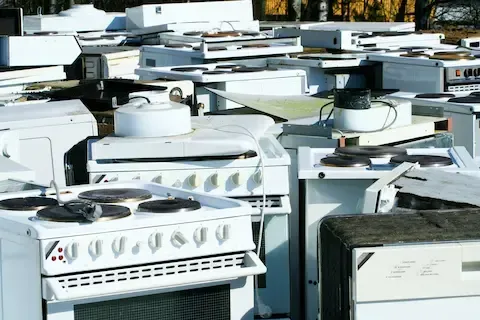
Most large appliances qualify as scrap metal once regulated components have been handled. Steel, copper, aluminum, and other recoverable metals in refrigerators, washers, dryers, and ranges have real commodity value, which is why legitimate appliance recyclers often operate at no cost or even modest credit to consumers — they recover their revenue through metal markets.
In the Portland metro region, which West Linn sits within for most practical purposes, there are scrap processors and appliance recyclers who meet Oregon DEQ standards. Some operate drop-off programs; others do route-based pickups. The Clackamas County transfer station in Tualatin is one option for drop-off of certain appliances, though the accepted items list and fees vary by material type, and the station has specific hours that don't always align with a typical workweek.
When metal recovery is handled correctly, it keeps functioning components and raw materials out of the landfill — which aligns with Oregon's broader materials management goals under the state's 2050 Sustainability Vision. For West Linn specifically, this matters because the city's character — residential, largely owner-occupied, bordering natural areas — makes improper disposal more visible and more consequential than in denser urban zones.
Appliance-by-Appliance: What the Rules Actually Look Like
It helps to think through the most common appliances by category:
- Refrigerators and freezers: Refrigerant recovery required. Foam insulation may contain HCFC blowing agents requiring segregated disposal. Most appliance recyclers handle this automatically.
- Window and portable air conditioners: Refrigerant recovery required. Often overlooked because they're small, but the same federal rules apply.
- Dehumidifiers: Refrigerant recovery required. These are frequently tossed in dumpsters incorrectly — a violation that the property owner can be held responsible for.
- Washers and dryers: No refrigerant, but older units may contain mercury switches. Straightforward scrap metal recycling applies in most cases.
- Dishwashers and ranges: Generally the simplest to recycle. Standard scrap metal pathway with no special regulatory requirements for most residential units.
- Microwaves: Not regulated as appliances under refrigerant rules, but electronic components may require e-waste handling depending on the recycler.
Choosing a Compliant Appliance Removal Service in West Linn
When you're hiring someone to remove appliances from a West Linn home, the right question to ask is not just "do you take appliances?" but "how do you handle refrigerant recovery and where do the units go?" A reputable service will be able to answer this directly. They'll either employ EPA 608-certified technicians, work with a certified partner, or route units to a processor that handles that step before scrapping.
If a hauler can't answer that question or brushes it off, that's a meaningful warning sign. Liability for improper refrigerant disposal can flow back to the original owner of the appliance under certain enforcement scenarios, particularly if a hauler dumps illegally. That's a risk not worth taking over a slightly lower pickup fee.
For a detailed look at what the process looks like for one of the most common appliances, the fridge disposal walkthrough covers the specific steps involved from your home to compliant recycling. And if you're ready to schedule a pickup for a single unit or a full appliance haul, Appliance Removal from West Linn Junk Removal includes refrigerant-compliant handling as part of the service.
Practical Considerations for West Linn Homeowners
West Linn homes — particularly those in older neighborhoods like Sunset and Willamette or the hillside properties near Marylhurst — often have aging appliances in garages, basements, or detached structures. A secondary refrigerator that's been in the garage for fifteen years, a chest freezer in the basement, or an old window unit stored in a closet all fall under the same rules as your primary kitchen appliances.
Don't assume an appliance is too old to matter. In fact, older units are more likely to contain refrigerants with higher global warming potential — another reason Oregon regulators care about proper recovery. The age of the appliance doesn't reduce your obligation to handle it correctly; it often increases the environmental case for doing so.
Planning matters too. If you're renovating a kitchen, replacing HVAC equipment, or doing a full household cleanout before a sale or move, scheduling appliance removal early in the project prevents the bottleneck of having units sitting in place when contractors need access. A coordinated removal of all appliances at once is typically more efficient and cost-effective than multiple separate calls.
